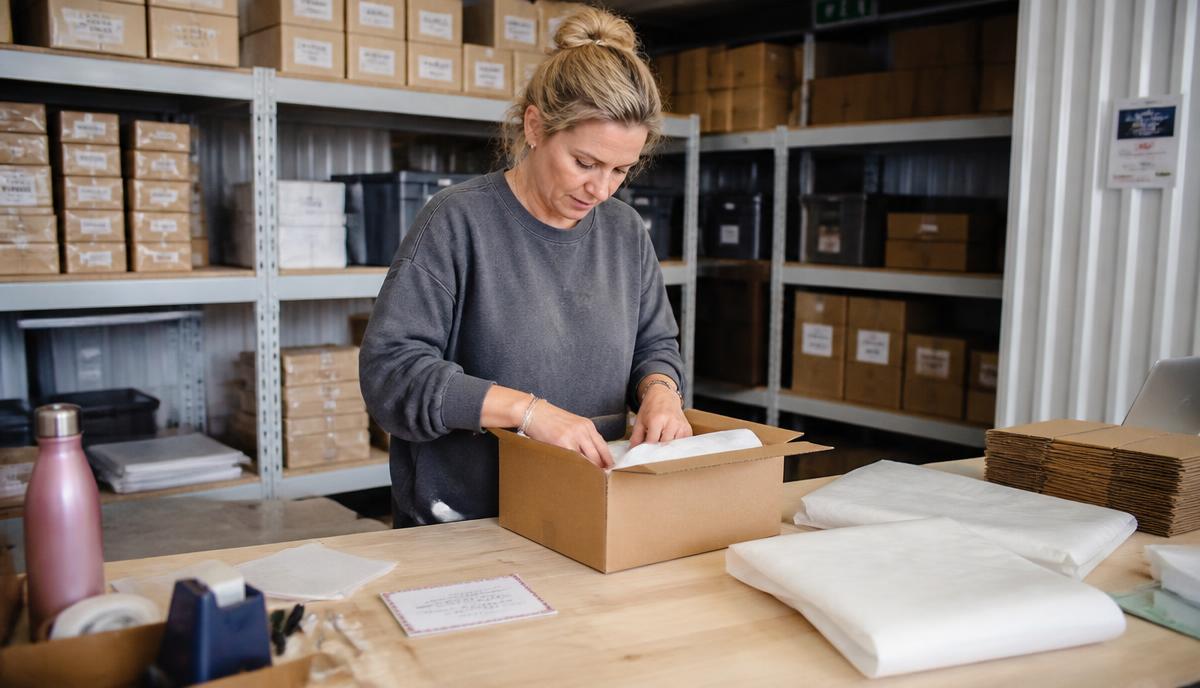
E-commerce Stock Storage: Moving Beyond the Spare Room in 2026
Almost every small online business starts in a spare room, a garage or a hallway. It works until it does not, and the tipping point is usually obvious in hindsight: you cannot find a SKU, you are picking orders at 11pm around a car, and you have started saying no to a bulk buy because there is nowhere to put it.
Self storage sits neatly between the spare room and a full warehouse lease, and for most UK sellers turning over less than a few hundred thousand a year it is the right next step. Here is how to do it without overpaying.
The signs it is time to move stock out
- You are turning down volume discounts because of space
- Picking and packing takes longer than it should because stock is not organised
- Home insurance is starting to look questionable with trading stock on site
- Family life and business life are physically in the same room
- You want a business address that is not your home
Container storage now accounts for a large share of new UK openings, which is good news for small businesses. Drive up container units are cheaper per square foot than indoor rooms and far easier to load with a car boot or a van.
Self storage, fulfilment centre or warehouse?
Self storage suits you if you pick and pack yourself, want a monthly rolling term, and value flexibility over cost per pallet. Typical costs run from around £25 a week for 50 sq ft up to £80 or more for 200 sq ft, with London and the South East above that.
Third party fulfilment (3PL) suits you if order volume is steady, products are uniform, and your time is worth more than the per order fee. You stop touching stock, but you also give up control and pay per pick.
A small industrial unit becomes cheaper per square foot at roughly 500 sq ft and above, but you take on business rates, a multi year lease, utilities and insurance. Do not sign one to save £40 a month.
For most sellers the honest answer is self storage until you are shipping 30 to 50 orders a day, then a conversation with a 3PL.
What to check before you sign
Not all facilities welcome business use, and the details matter:
- Business use permitted, in writing. Some sites restrict trading activity or deliveries.
- Deliveries accepted on your behalf. This is the single most valuable feature for an online seller. Ask whether staff will sign for pallets and courier drops, and whether there is a fee.
- Access hours. 24 hour access is worth paying a little more for if you dispatch daily.
- Loading facilities. Trolleys, a loading bay, a tail lift friendly yard, and whether a pallet can physically reach your unit.
- Power. Most units have no power. If you need to run a printer or a heat press, ask about a plug in the communal area or a business unit with electricity.
- Wifi and a packing bench. Some sites offer both, which turns a unit into a workable dispatch room.
- Insurance. Storage insurance is usually priced on declared value, and standard cover often excludes goods held for resale. Declare stock properly.
- VAT. Storage of goods is generally standard rated for VAT, so factor in the 20 per cent if you are not VAT registered.
Organising the unit so picking is fast
- Leave a central aisle wide enough to turn with a trolley
- Fast movers at the front and at waist height, slow movers high and at the back
- Number every shelf bay and record the bay in your inventory system, not just the SKU
- Use uniform boxes or plastic totes so stacks are stable and countable
- Keep a packing station near the door with your consumables
- Do a rolling stock count of one bay a week rather than a painful full count each quarter
- Photograph the layout so anyone helping can find things
Cost control
Rates are negotiable, particularly for longer commitments and for units that have been empty. Ask about:
- A discount for paying quarterly or annually
- The rate after any introductory offer ends, and how much notice you get of an increase
- Whether a slightly larger unit on an upper floor is cheaper than a small ground floor one
- Moving to a cheaper unit at the same site during a quiet season
Benchmark whatever you are quoted against local averages with our fair price checker, and read our guide to UK storage prices by city before you negotiate. The size calculator will convert a pallet and shelving plan into a square footage.
Tax and admin basics
Storage costs for trading stock are an allowable business expense. Keep the invoices, and if you are using the unit as a business address, check that the facility allows it and that you have registered the correct trading address with HMRC and Companies House. HMRC's guidance on expenses if you are self employed is the plainest reference.
Find business friendly storage near you
Compare local sites on access hours, delivery acceptance and price. Start with our business storage guide, browse by region such as self storage in the North West or the South West, or see every UK area guide.
Short on time? Tell our AI storage search what you need, for example "50 sq ft business unit in Bristol that accepts pallet deliveries", and it will come back with local facilities, prices where published and contact details.
More business storage guides
Keep reading, or browse the full archive of Find My Storage advice.
- Small Business Storage Solutions for Newport Entrepreneurs in 2026Discover flexible workspace and storage solutions for Newport small businesses. From Pillgwenlly to Maindee, find cost-effective ways to grow your business in 2026.Read guide
- Small Business Storage Solutions in Southend-on-Sea: Flexible Workspace Tips for 2026Discover how Southend-on-Sea entrepreneurs can maximise small business success with flexible storage solutions, workspace tips, and local business insights for 2026.Read guide
- Small Business Storage Solutions in Bristol: Flexible Workspace Tips for 2026Discover how Bristol's small businesses can optimise their workspace with flexible storage solutions. Expert tips for entrepreneurs in Clifton, Redland, and beyond.Read guide
Looking for storage?
Compare prices and find the best self storage facility near you, or browse UK locations by city.